What Pole Work Actually Does for a Model
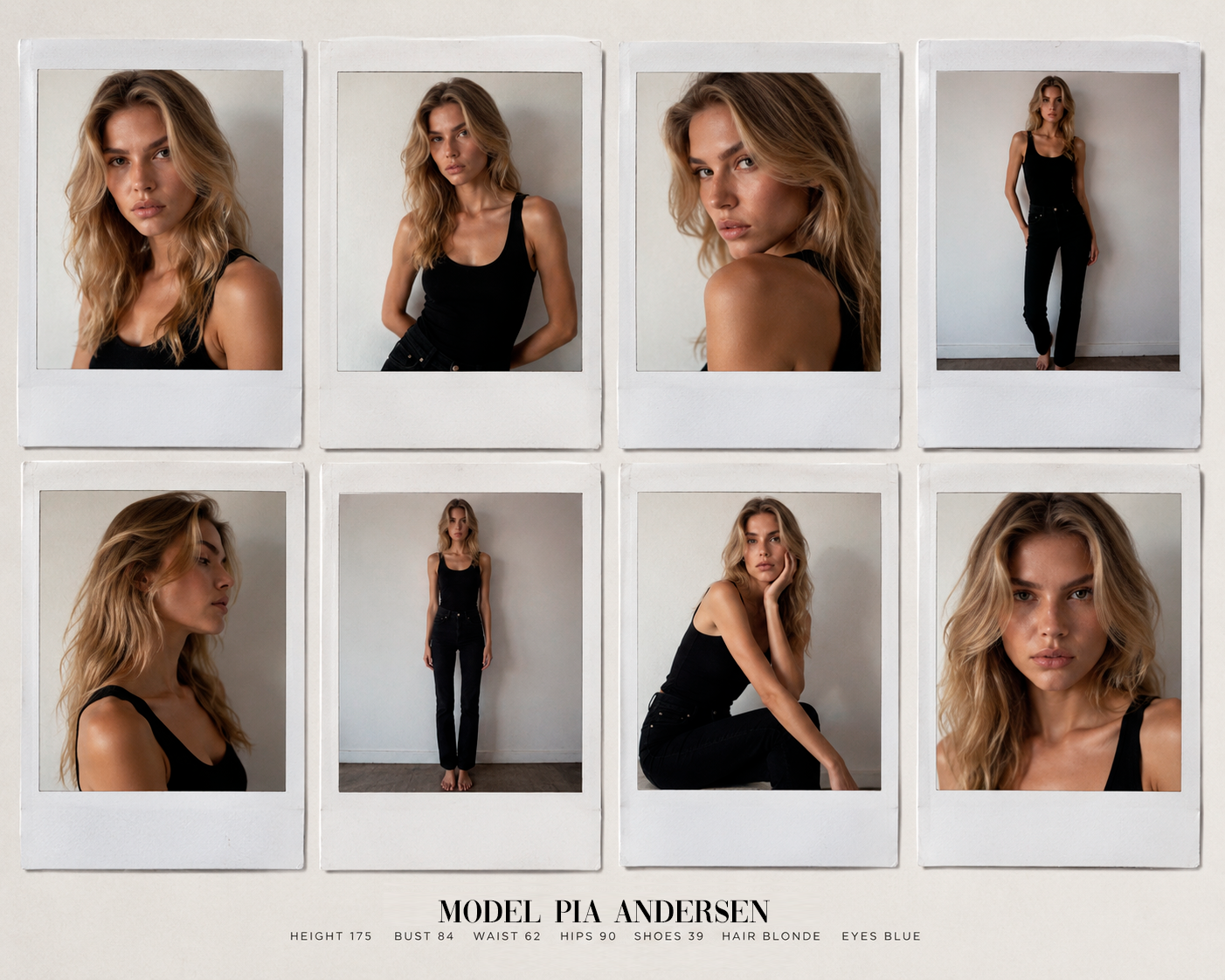
What are polaroids and why do they matter in modeling?
If you're starting out in modeling or you're a photographer working with models seeking representation, you'll eventually hear the term polaroids. It's not meaningless fashion jargon—it's one of the most functional and direct tools in the industry, and understanding what they are and how to execute them properly can make a real difference in a model's career.
Polaroids—named after the instant film originally used for this purpose—are simple, clean, unretouched photographs that show the model exactly as she is in that moment. No filters, no aggressive post-processing, no special styling. They're the most honest and functional version of a model's portfolio.
What do polaroids do for a model?
Polaroids serve one specific purpose: showing the model's natural potential to the professionals who will work with her. Casting directors, agencies, fashion designers, and creative directors need to see who the person actually is, not a digitally constructed version.
This makes professional sense. When an agency signs a model or a client selects her for a job, they need to know exactly what they're getting: her real facial structure, her build, her skin, her visual presence on camera. Heavily edited images can hide all of that and lead to disappointment at castings or shoots.
- They allow evaluation of potential without artificial visual interference.
- They serve as an updated reference of the model's current state.
- They're the standard presentation format for modeling agencies.
- They enable quick selection at castings with many candidates.
- They help identify the types of work the model is suited for.
Polaroids aren't meant to make the model look perfect. They're meant to make her look real. That's precisely their strength.
What photos are included in a polaroid set?
A standard polaroid set usually includes four to six images covering the angles and framing most relevant to an agency. While this varies by market—there are differences between what's expected in Denmark versus Spain, for example—the typical set includes:
- Straight-on headshot: no forced expression, direct eye contact with camera, good diffused frontal lighting.
- Profile shot: left or right, to evaluate facial structure from another angle.
- Full-body shot from the front: wearing neutral clothing or basic underwear, natural and upright posture.
- Full-body shot from the back: same clothing standards, clean posture.
- Three-quarter or mid-shot: an intermediate framing that shows presence on camera.
- Natural smile: optional but valued, especially for commercial work.
Technical execution
This is where the photographer's role becomes essential. Polaroids aren't smartphone photos taken at home with poor lighting—though they're sometimes used that way in informal contexts—but technically correct images that require photographic skill.
The lighting must be soft, even, and neutral. The standard approach is diffused natural light or a well-positioned softbox that doesn't create harsh shadows or distort skin tone. The ideal background is white or neutral gray, with nothing distracting. The lens should be standard or slightly telephoto—between 50mm and 85mm on full frame—to avoid perspective distortion that would misrepresent the model's actual features.
Post-processing is limited to exposure and white balance correction. No skin smoothing, no shape adjustments, no color filters. The model wears no makeup or minimal natural makeup. Hair is clean and simply styled. Clothing is simple and free of bold patterns.
A well-lit, unretouched set of polaroids says more about a model than ten fully produced portfolio shots. Agencies know this perfectly well.
What agencies look for in good polaroids
Modeling agencies—whether in markets like Denmark, which emphasizes neutrality and minimalist elegance, or Spain, where presence and personality carry more weight—evaluate aspects in polaroids that no retouching can fabricate:
- Facial symmetry and structure.
- Skin quality and texture under real conditions.
- Natural body proportions.
- Camera presence without direction or production.
- Ability to convey something with a clean, unadorned look.
A model with well-executed polaroids arrives at an agency with a professional presentation that makes decision-making easier. And a photographer who knows how to execute them correctly demonstrates understanding of the industry's real needs, not just the creative side of the business.
When to update polaroids
Polaroids should reflect the model's current state. A change in weight, hair, or simply the passage of time are all good reasons to refresh them. As a general rule, update the set every six to twelve months, or whenever there's a relevant physical change. Presenting outdated polaroids can create trust issues with agencies or clients who rely on them for decision-making.