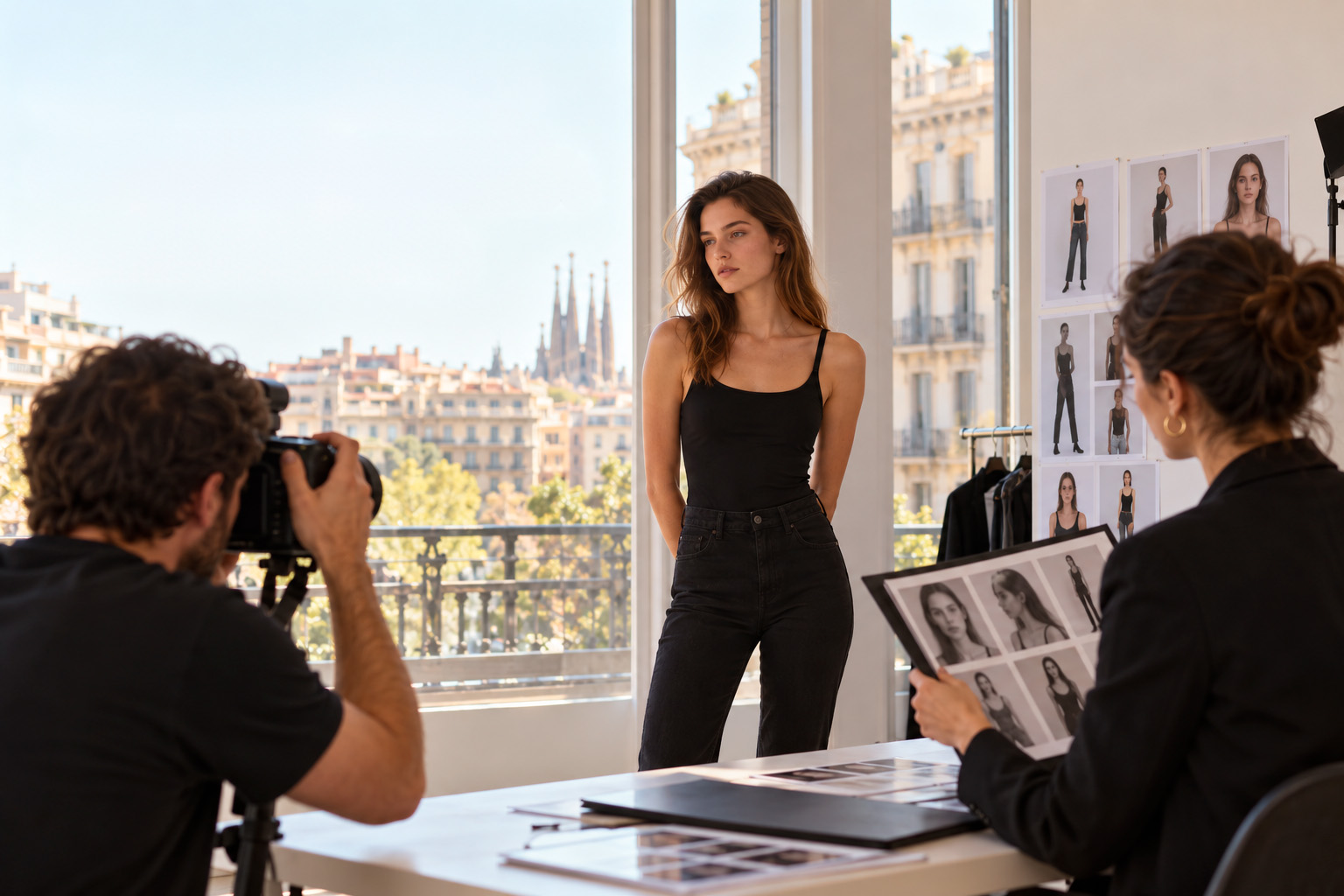
The Photos You Need to Start as a Model (And Which Ones to Skip)
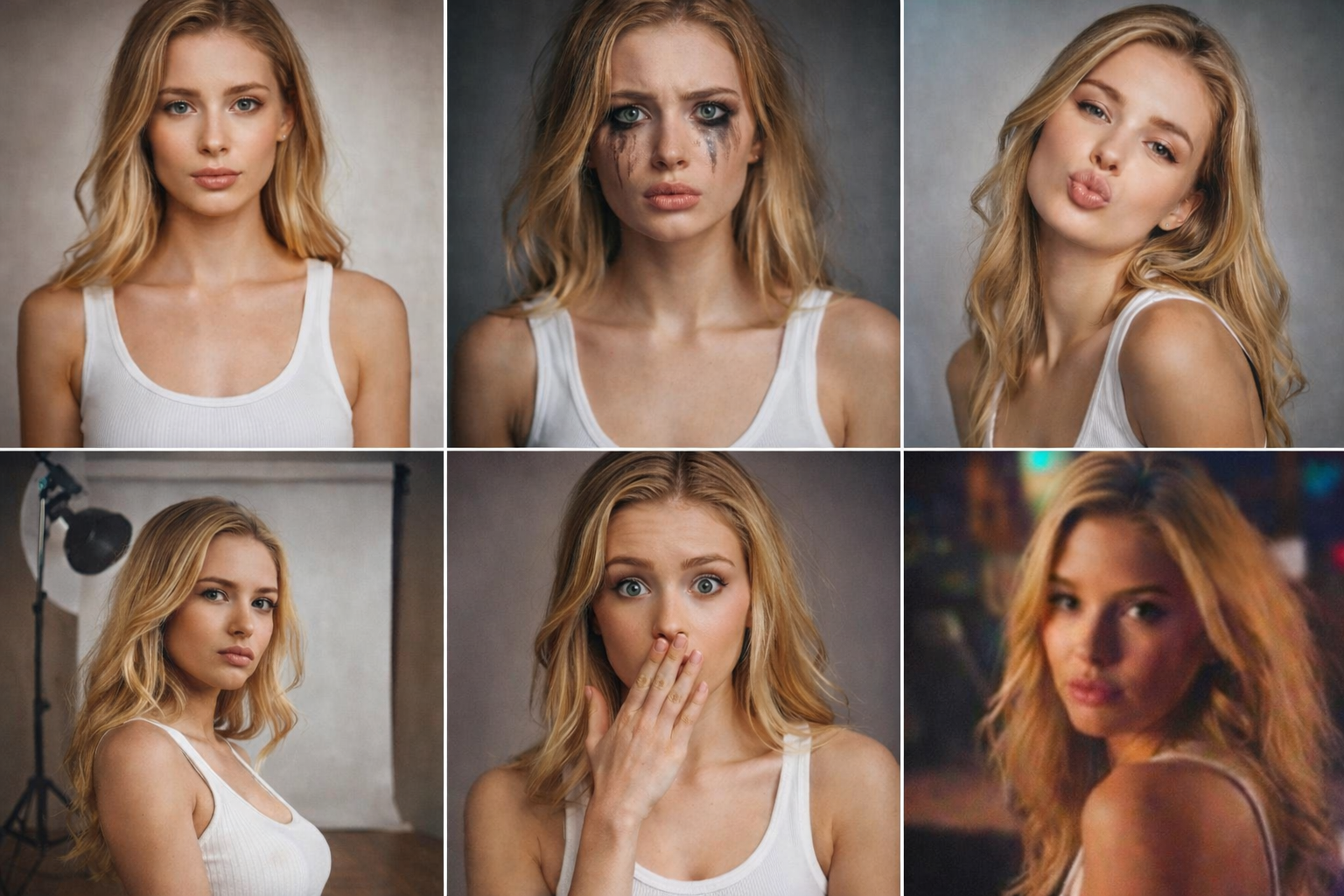
The portfolio that opens doors (and the one that closes them)
When you're starting out as a model, the temptation is to fill your portfolio with everything you have: well-lit selfies, photos from your last party, that impromptu shoot with a friend's phone. Mistake. The clients, agencies, and photographers you want to work with evaluate your profile in seconds, and what they see tells them far more than you might think.
You don't need fifty photos. You need the right photos. This article cuts straight to it: which images build a solid professional foundation and which ones are better left out from day one.
The photos you actually need
1. A clean, strong headshot
Your headshot is your introduction. It should show your face clearly, without aggressive filters or shadows that hide your facial structure. Neutral background, frontal or slightly side lighting, natural expression. It's not a passport photo, but it's not an editorial either—it's a working tool.
An honest headshot is worth more than ten over-retouched portraits. Agencies want to know what you actually look like, not how you'd like to look.
2. A full-body shot
Non-negotiable. It should show your silhouette, posture, and overall proportions. Fitted, neutral clothing without distracting patterns. It doesn't need to be an elaborate production, but the lighting should be even and the framing clean. This photo answers the most basic question any client asks before hiring you.
3. A shot with movement or attitude
The best starter portfolios include at least one image that shows how you move or convey emotion. It doesn't have to be dramatic, but it should prove you're not a statue in front of the camera. A direct gaze with intention, a natural turn, an authentic gesture. This is what separates someone with real potential from someone who just photographs well.
4. A styled shot
Makeup, hair, or wardrobe that demonstrates versatility. You don't need an expensive production—a session with a makeup artist building their portfolio or an emerging photographer can give you this image for minimal cost. The point is showing a version of yourself that's different from your headshot, proving you can adapt.
Photos to skip
- Selfies, no matter how good. The angle is always forced and signals inexperience in front of the camera.
- Heavily retouched or filtered images. They distort your actual features and create doubt when clients see you in person or at casting.
- Images with other people in the foreground. Your portfolio exists for clients to see you, not to figure out who you're with.
- Photos from personal or casual settings. A wedding, a vacation beach, a party—even if you look great, they don't belong in a professional portfolio.
- Forced or unnatural poses. Magazine-style poses you haven't practiced with a photographer usually look stiff. A bad image is worse than no image at all.
- Watermarks from other platforms or apps. They signal carelessness and clutter your portfolio visually.
How many photos do you actually need to start?
Four or five well-chosen images are enough to launch your profile. A lean but cohesive portfolio reads more professional than an extensive, scattered one. Visual consistency matters—if your photos have wildly different styles, inconsistent quality, or contradictory messages, the whole thing weakens each individual image.
A portfolio is an edit, not an archive. Show your best, not everything.
Getting these photos without a big budget
The good news: you don't need major investment for a solid starter portfolio. Platforms like Apreia connect emerging models with photographers and makeup artists building their own portfolios. Collaboration shoots or TFP (time for prints) are a real and very common way to get quality images at no direct cost.
What you do need to care about is who you collaborate with. Review the photographer's previous work before confirming a shoot, make sure their style aligns with what you want to show, and establish image rights from the beginning.
Your portfolio evolves—don't get stuck waiting
One of the biggest mistakes starting out is waiting for perfect conditions before publishing your portfolio. Start with what you have if it meets the minimum standards, and update it as you get better images. An active profile with a few solid photos works better than an empty profile waiting for the ideal moment.
What you need to start as a model isn't a big budget or existing connections. You need clarity on what you want to show and the discipline to not publish what doesn't add value.