How to Launch Your Modeling Career from Zero

First things first: understanding what it means to model without experience
Starting as a model with zero work in your portfolio can feel like a catch-22: you need photos to land jobs, but you need jobs to get photos. The good news? This starting point is far more common than you'd think, and there's a proven way through it without wasting time or falling into traps.
Before thinking about agencies or casting calls, it's worth knowing that professional modeling doesn't start with your face or body—it starts with your mindset, preparation, and the choices you make from day one.
Build your first portfolio from scratch
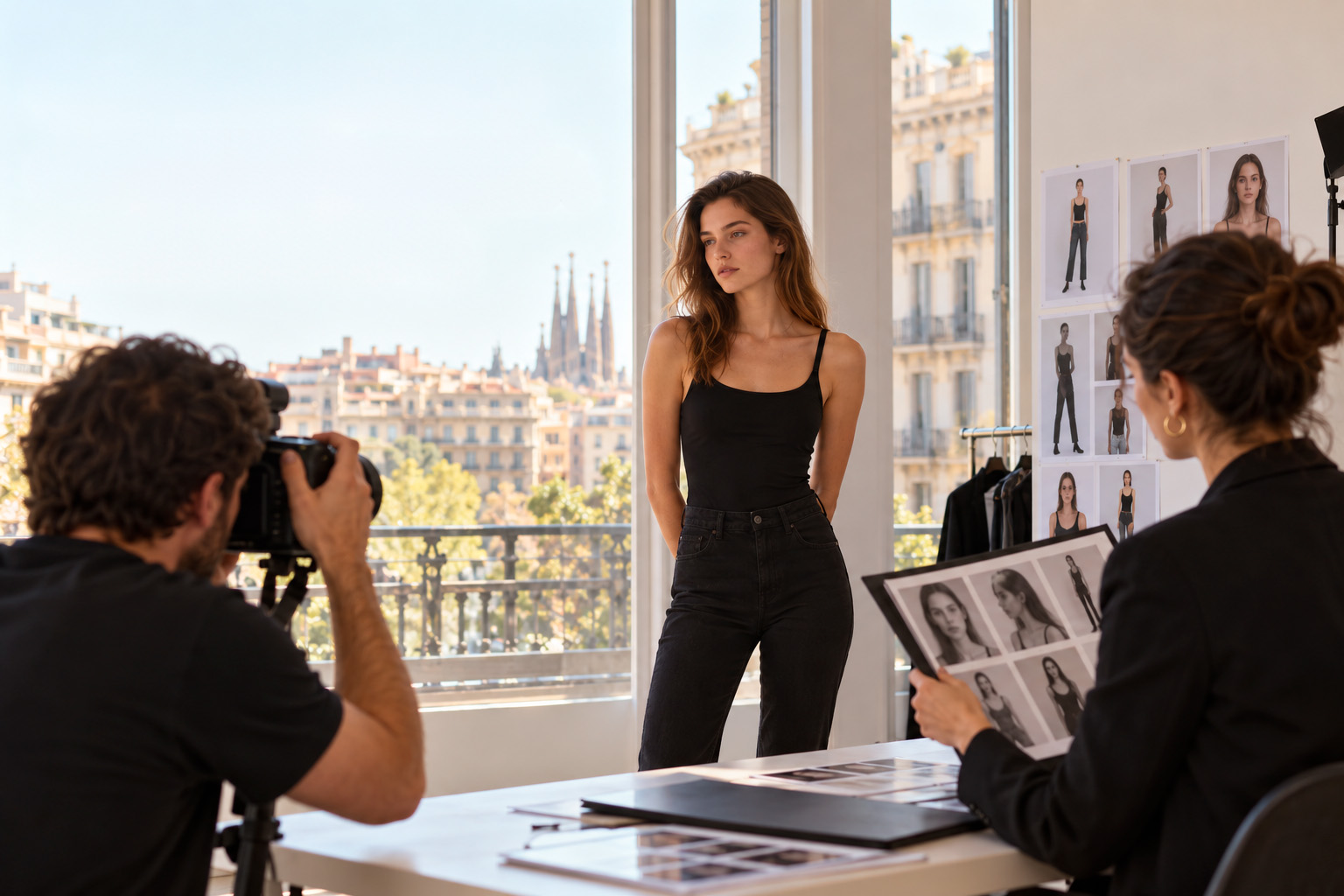
Your portfolio is your introduction. Without it, photographers, agencies, and clients can't objectively assess your potential. The most effective strategy for building one with no prior experience is collaborating with photographers on TFP (Time for Print) sessions, also called TFT (Time for Time). In this arrangement, you both invest your time and walk away with the images—no money changes hands.
Platforms like Apreia exist specifically to connect creatives for collaborations like these. Create your profile, signal that you're looking for TFP sessions, and start connecting with photographers building their portfolios too.
Three to five carefully chosen sessions beat twenty mediocre shots every time. Quality over quantity, always.
For those first sessions, aim for variety: one natural look, one more editorial piece, and something in everyday wear. It gives potential clients a real sense of your range.
What you need to prepare before your first shoot
Showing up prepared for a photo session makes the difference between usable images and a wasted afternoon. While the photographer directs the shoot, you have real responsibilities:
- Take care of your skin and hydration in the days leading up. The camera catches everything, and rested skin responds infinitely better to light.
- Bring wardrobe options even if they weren't requested. Show initiative and thought about the shoot concept.
- Learn basic poses beforehand. Practice in the mirror or study fashion editorials for reference. It's not about copying—it's about losing that initial stiffness.
- Get solid sleep the night before. Tiredness shows in your eyes and energy, and no filter can fix that.
- Arrive on time with buffer time to spare. Lateness is one of the fastest ways to not get called back in creative industries.
Learn the basics of photographic technique (it directly benefits you)
You don't need to know how to operate a camera, but understanding how light works and why it matters is essential. When a photographer asks you to turn your head slightly or extend your neck, there's a technical reason: the angle of the light, shadows on your face, or framing in the shot.
Models who grasp these fundamentals collaborate more smoothly and produce better results in less time. A few concepts worth knowing:
- Natural vs. artificial light: window light is soft and flattering; studio flash can be harsher and requires more body awareness.
- The camera axis: knowing where the lens is and staying conscious of that line helps you avoid poses that unintentionally distort your frame.
- The power of the eyes: in portrait work, focus always goes to the eyes. An engaged look can completely transform a technically perfect image.
The best models don't wait for instructions on every move. They listen, contribute ideas, and adapt. That shows in the final images and people remember it.
How to present yourself professionally from day one
In markets like Denmark or Spain, where the creative industry values mindset as much as visuals, your reputation starts building from your first interaction. That means how you write messages, how you describe your availability, and how you handle a curveball.
Create a complete Apreia profile with current photos (even good phone shots in natural light), your real measurements, your location, and an honest brief about your experience. Don't oversell what you don't have—professionals spot inconsistencies between description and reality instantly.
Reply to messages quickly, confirm the details of each shoot, and ask for feedback when you're done. That feedback is more valuable than any course when you're starting out.
The most common mistake beginners make
Trying to do everything at once. Many people new to modeling sign up for five platforms, message twenty photographers in a day, and expect instant results. The creative industry runs on relationships and consistency, not message volume.
Choose your collaborators carefully, treat each shoot like it's your most important one, and build your network gradually. A modeling career isn't made or broken in a month, but the right direction can be set from that very first smart decision.