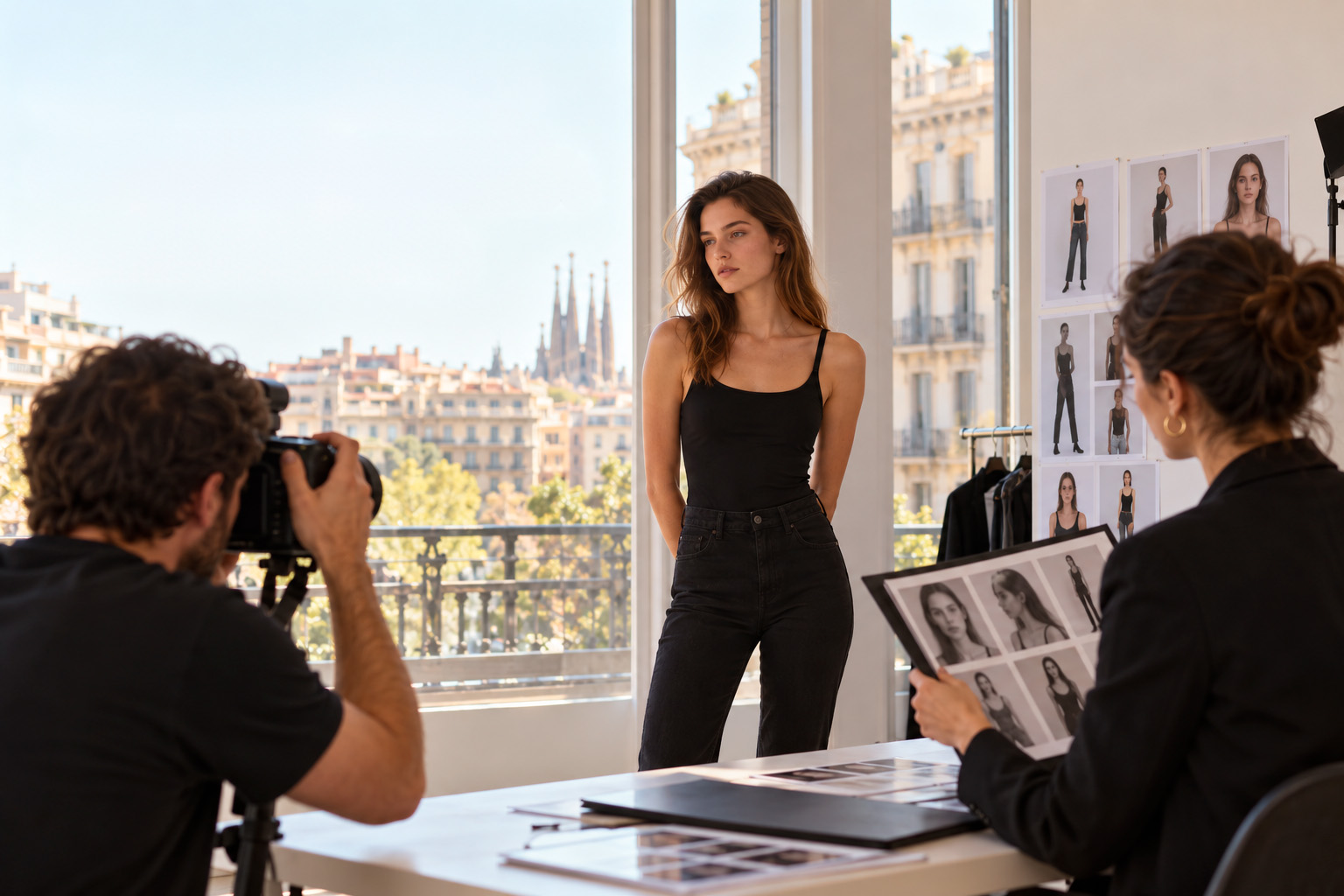
If I’m a model but I don’t know how to do my makeup, what should I do for the photoshoot?
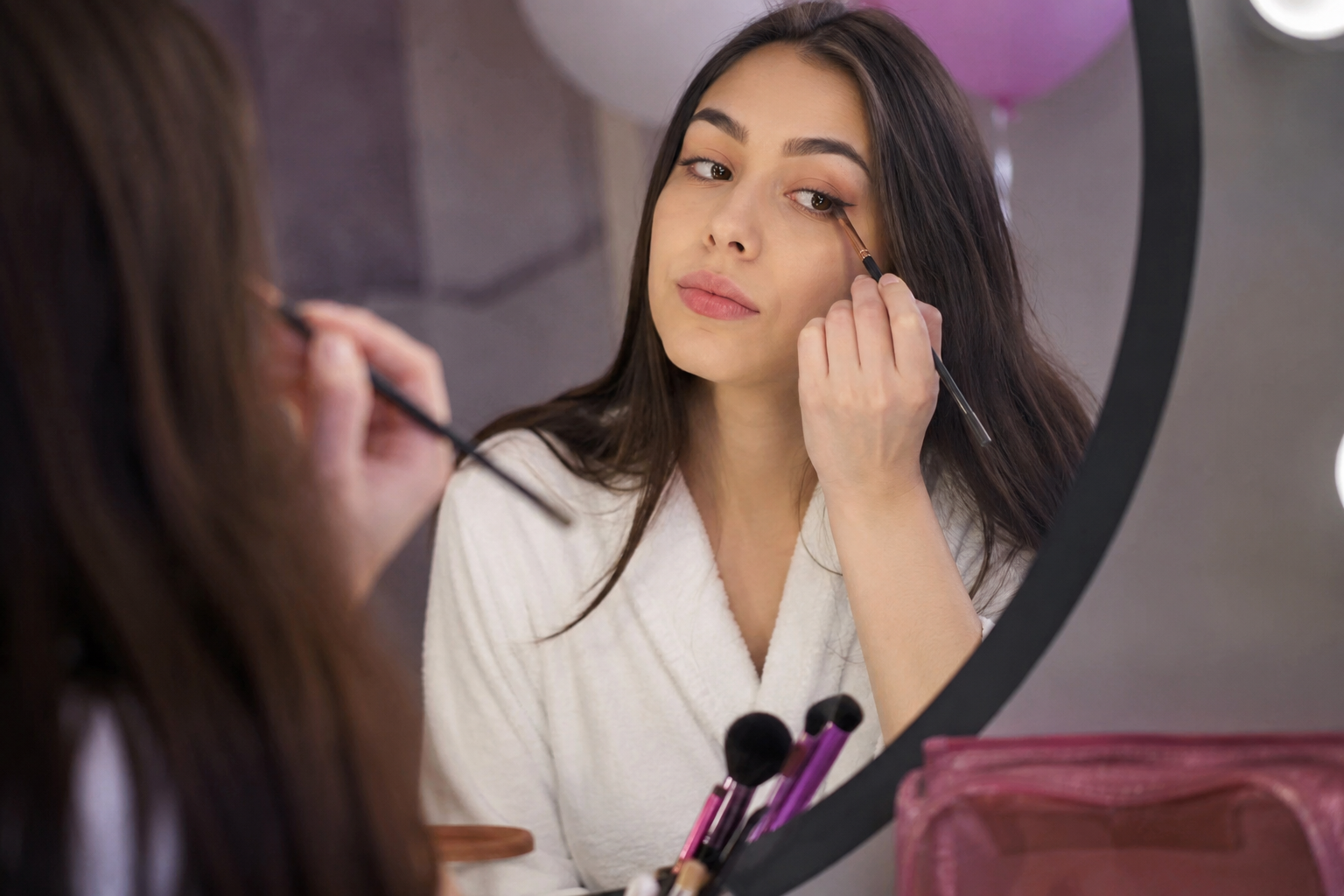
Makeup at the casting: the detail that makes the difference
If you're a model and don't regularly work with a professional makeup artist, there's a question that inevitably comes up before a casting: do I wear makeup or not? The short answer is: it depends. The useful answer is what you'll find here.
In most photo castings, especially in markets like Spain or Denmark where production standards keep getting higher, models are expected to arrive looking polished with their skin camera-ready. We're not talking about an elaborate look. We're talking about base makeup: the prep work that gets your face ready for the camera without imposing any particular style.
What exactly does "base makeup" mean?
It's not the same as a foundation product. It's a broader concept that covers the essentials for your skin to photograph well under any lighting conditions, without the photographer or client having to deal with technical imperfections that could've been fixed beforehand.
A casting base makeup includes, at minimum:
- Skin hydration and prep (primer or light base that evens out tone)
- Spot correction of visible imperfections
- Under-eye concealer if there's visible fatigue
- Translucent powder to control shine
- Naturally defined brows
- A touch of neutral-toned mascara, if it suits your look
What it does not include: heavy contouring, elaborate eye shadows, bold lip colors, or anything that locks down the client's creative direction.
Why the camera doesn't forgive what the eye tolerates
This is the technical point that gets overlooked most. The human eye has remarkable adaptive capacity: it adjusts contrast, softens textures, and automatically corrects tons of imperfections. The camera, on the other hand, records with literal precision that can look pretty unflattering if your skin isn't minimally prepped.
Under studio flash or continuous light, unprepared skin tends to show dilated pores, uneven shine, and tonal variations that are invisible in real life. This isn't a beauty issue—it's a technical problem that slows down the photographer's work and at a casting can read as lack of professional preparation.
A model who arrives at a casting with prepped skin signals that they understand the photography process. That says more than you'd think at first impression.
What the client and photographer see when you show up without base makeup
It's not aesthetic judgment. It's about time and practicality. If there's a makeup artist at the casting, great—they'll work on a clean base or work with what you've brought. If there isn't one, the photographer has to decide whether to do retouches in post, adjust lighting to compensate, or simply work with what they've got.
None of those options is ideal. The first adds hours of work. The second compromises the creative outcome. The third might knock you out of the final selection—not because of your look, but because of a technical variable you could've controlled.
How to build your base makeup kit for castings
You don't need to be an expert or invest in high-end products. You need to know your skin tone well and have a small functional kit on hand:
- Foundation or BB cream in your exact shade: the most common mistake is using a tone that's too light or dark—it shows immediately in photos.
- Creamy concealer: for under-eye circles and redness. Apply with a damp sponge for a more natural finish.
- Compact translucent powders: sets the concealer and eliminates shine. Always carry it in your bag for touch-ups before you go in.
- Brow gel or pomade: defines without overdoing it. Brows structure the face in photos in a major way.
- Tinted lip balm: hydrates and adds presence without imposing a look.
The retouching moment: just before, not hours before
Another common mistake is doing your makeup too early. If your casting is at noon and you did makeup first thing in the morning, the base will have shifted, powder will be caked, and concealer will have creased. Save the last fifteen minutes before you walk in for a quick touch-up: powder, brows, and lip balm. That's enough.
Always carry blotting papers in addition to powder. At castings with long waits or on hot days, they're your best friend for staying fresh when it's time to shoot.
A final thought on professionalism
Base makeup at a casting isn't vanity or insecurity. It's craft knowledge. Creative professionals who work in front of the camera—models, actors, presenters—understand that visual preparation is part of their technical responsibility. Showing up ready to work, without relying on the production team to fix what you can handle at home, clearly signals that you know exactly what world you're operating in.