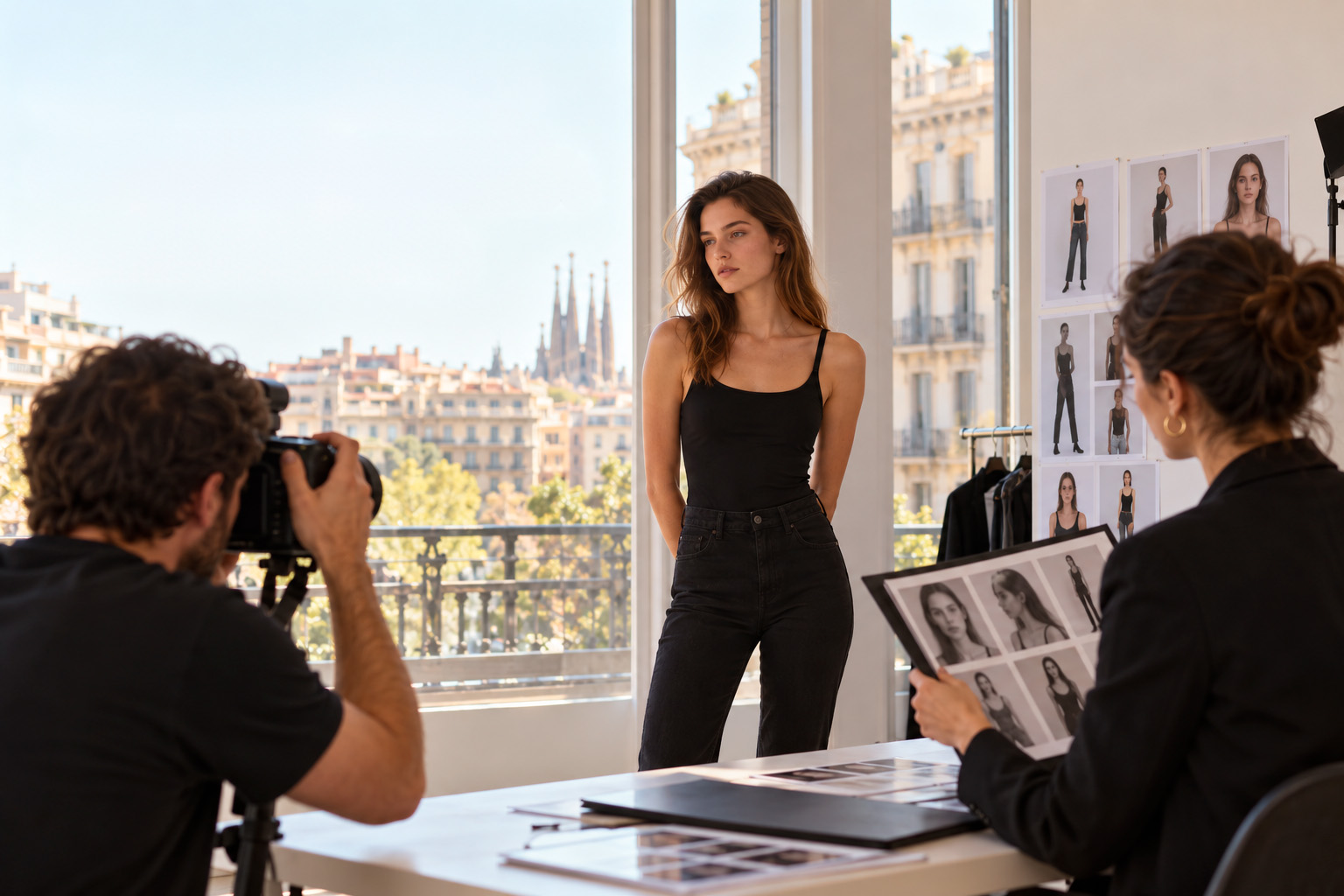
Editorial Photography, Castings & Creative Networking
Editorial Photography: Beyond the Conventional Portrait
Editorial photography has its own rules, and understanding them is what separates a portfolio that opens doors from one that gets overlooked. Unlike commercial work or classical portraiture, editorial demands visual narrative: every image must sustain a story, fit within a sequence, and communicate an idea with precision.
Before discussing gear or technique, the starting point is always concept. Working without a solid moodboard is like showing up to an audition without knowing your character. Define the aesthetic universe of the project, identify concrete visual references, and share them with your team before the shoot day. Time on set is limited and expensive; pre-production is where productions are won or lost.
Essential Equipment for Editorial Production
There's no single kit that works for every project, but certain technical decisions come up repeatedly on professional editorial shoots. Here are the most relevant ones:
- Camera body: Full frame systems remain the editorial standard for their performance in variable light and RAW file quality. Canon R5, Sony A7R V, and Nikon Z8 are established options in the industry.
- Lenses: A prime focal length between 50mm and 85mm is the backbone of any fashion shoot. Minimal distortion and fast aperture let you work consistently in both studio and on location.
- Lighting: Studio flash with large modifiers—a 120cm octabox or bigger—creates wraparound light that flatters skin and cuts retouching time. For outdoor work, a silver reflector and a portable fill flash are enough to control harsh shadows.
- Cards and backup: Always shoot with dual slots and back up to an external drive before leaving set. Losing an editorial shoot isn't just a financial problem; it affects your reputation with the creative team and the brands involved.
The best camera for editorial is one you know inside out. Mastering your gear under pressure beats owning the most expensive body on the market.
Casting: How to Prepare and Run an Efficient Selection
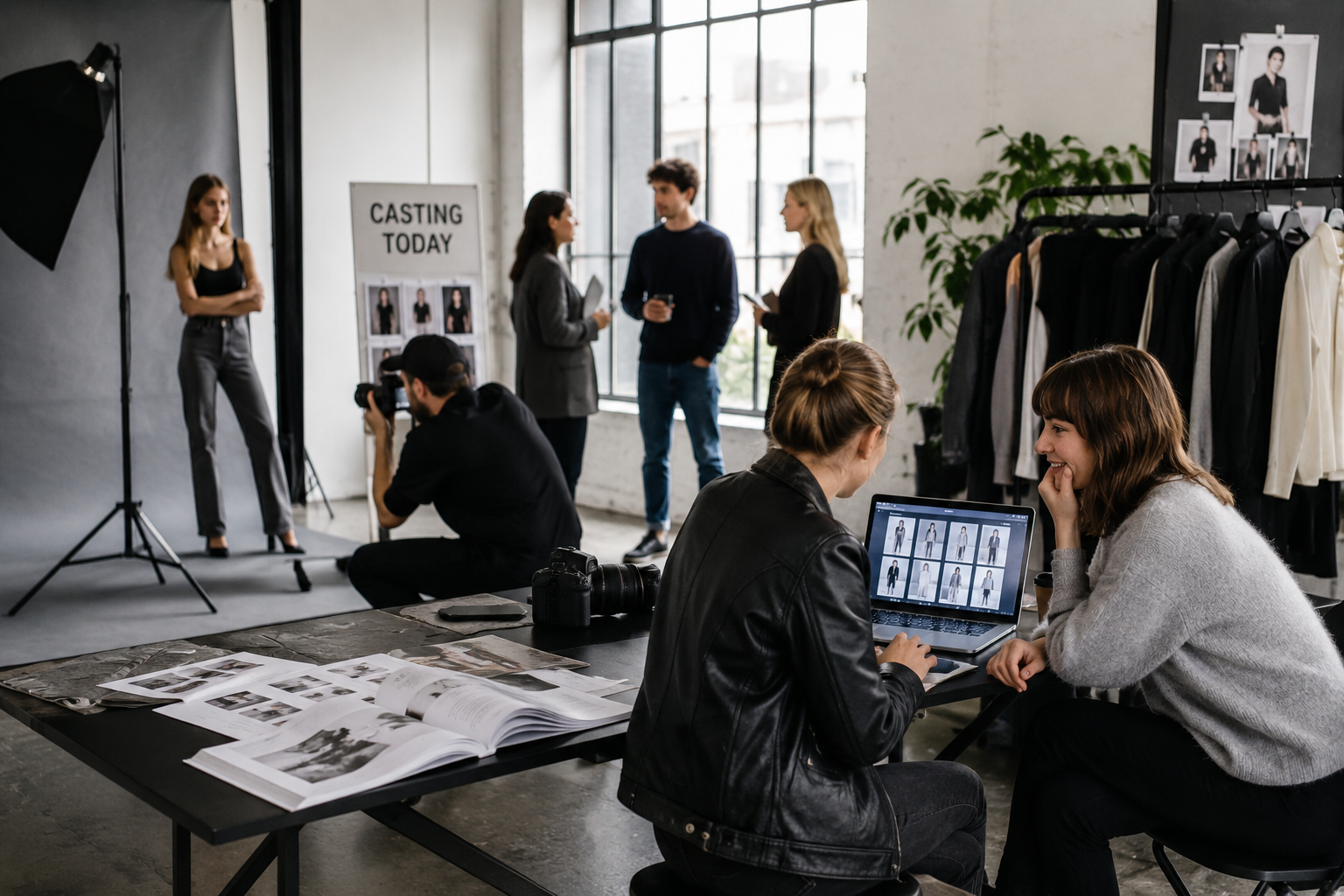
Casting isn't just about picking a face. It's about finding who can interpret the concept you have in mind and work well within a team. Whether you're the photographer or the creative director, certain practical aspects make the process smoother.
Define your physical and expressive profile requirements upfront. Don't just say "female model, 20–30 years old." Be specific about energy, how they perform in front of the camera, whether the project needs editorial experience or can work with fresh faces. The more information you share in the call, the better candidates you'll attract and the less time you'll waste.
During casting, always run a movement test. Static photos from a portfolio don't reveal how someone moves on camera or how they respond to direction. Ask for three poses in thirty seconds and watch the transitions. That's where authenticity shows.
- Set up a space with neutral lighting and a clean background for tests.
- Always take reference photos; don't rely on memory alone.
- Communicate casting results within a reasonable timeframe; professional communication builds reputation too.
Creative Networking: Building Without Pretending
In markets like Denmark and Spain, the creative community is relatively tight and professional connections last for years. That means every collaboration is both a job and a relational investment.
Effective networking doesn't happen mainly at events with business cards. It happens in joint productions, well-executed TFP projects, genuine comments on other professionals' work. Platforms like Apreia are designed specifically to enable that kind of direct connection between photographers, models, makeup artists, and stylists looking to collaborate on real projects.
A well-planned TFP with a committed team builds portfolio, experience, and professional relationships that last. A poorly managed TFP wastes time and damages trust in the sector.
When you propose a collaboration, be specific: what kind of project, what you need from the other person, what you bring to the table, what the intended use of the images is. Clarity from the start prevents misunderstandings and shows you know what you're doing.
Consistency as Professional Strategy
Technique, casting, and networking are tools. What turns them into a solid career is consistency: publishing regularly, maintaining a recognizable style, keeping your commitments, and continuing to improve your work. In editorial photography, the market remembers those who show up frequently and with their own vision. That's the only real shortcut.